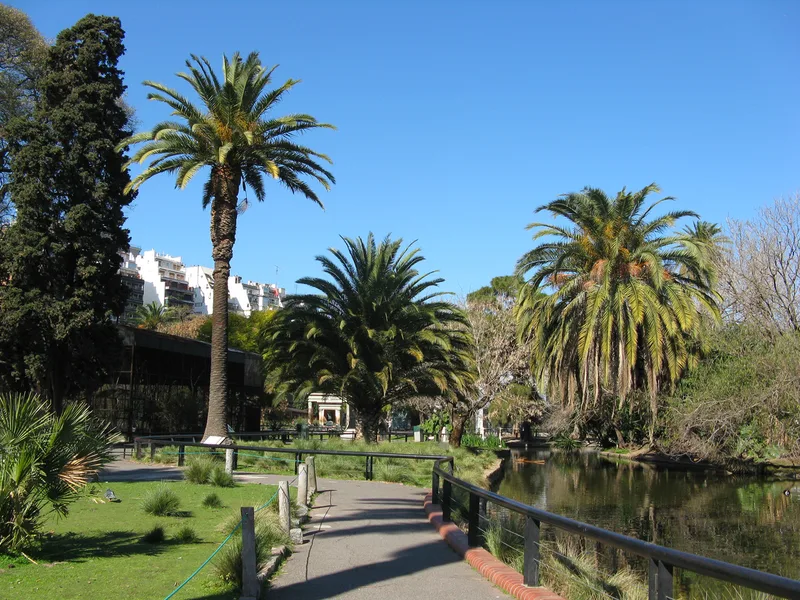
The Buenos Aires Eco Park (Spanish: Ecoparque de Buenos Aires) is an 18-hectare (44-acre) park in the Palermo district of Buenos Aires, Argentina. The former zoo, opened in 1888, contained 89 species of mammals, 49 species of reptiles and 175 species of birds, with a total of over 2,500 animals. The institution's goals are to conserve species, produce research and to educate the public. In June 2016 the city formed a bias about the zoo's cruelty. They had to close the 140-year-old zoo and relocate most of the animals to nature reserves, including Temaikèn. The zoo property has been converted into an ecopark.
The zoo (which had been declared National Historic Monument of Argentina in 1997) closed in 2016, reopening as an ecopark in 2018. Its more than 40 historic buildings (that had been declared historical heritage) were refurbished, including the arc at the main entrance, the parrots pavilion, the Byzantine ruins, the Confitería del Aguila, and the herons bridge, among others.
Some of the historic buildings constructed for the former zoo and inherited by the Ecopark include the neo-Gothic "Casa de los Osos" ("Bear House"), the Islamic-influenced "Pabellón de la Jirafa" ("Giraffe Pavilion"), the "Templo de Vesta", which pays homage to a temple dedicated to Hercules, the "Pabellón de los Loros" ("Parrot Pavilion"), donated by the Spanish government, the "Pagoda" where the bears lived, and the "Jaula de los Cóndores" ("Condor Cage").