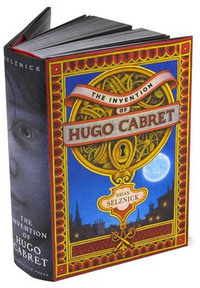

A novel by Brian Selznick that combines text and illustrations
Scores and rankings reflect aggregated community opinion and are not editorial assessments by Peakd. Entity information (descriptions, images, links, pricing) may be sourced from automated tools or community contributions and is not guaranteed to be accurate or up-to-date. Peakd does not endorse, verify, or guarantee the accuracy of any content. Represent this entity? Claim this page to manage it. · Terms · Removal requests
Your slider rating is attached automatically. Write about your experience to help others decide.
No reviews yet. Be the first to share your experience.
ORPHAN, CLOCK KEEPER, AND THIEF, twelve-year-old Hugo lives in the walls of a busy Paris train station, where his survival depends on secrets and anonymity. But when his world suddenly interlocks with an eccentric girl and the owner of a small toy booth in the train station, Hugo’s undercover life, and his most precious secret, are put in jeopardy. A cryptic drawing, a treasured notebook, a stolen key, a mechanical man, and a hidden message all come together...in The Invention of Hugo Cabret. This 526-page book is told in both words and pictures. The Invention of Hugo Cabret is not exactly a novel, and it’s not quite a picture book, and it’s not really a graphic novel, or a flip book, or a movie, but a combination of all these things. Each picture (there are nearly three hundred pages of pictures!) takes up an entire double page spread, and the story moves forward because you turn the pages to see the next moment unfold in front of you. ([source](https://www.theinventionofhugocabret.com/about_hugo_intro.htm))