Best Databases
Ranked by community votes
· Updated in real-time
Rankings factor in vote confidence: an entity with more votes may outrank one with a higher score but fewer votes.
P
#1 Ranked
PostgreSQL
The world's most advanced open source database
8.7
6 ratings
–
M
Microsoft
Technology company providing software and services for personal and business use
7.6
–
M
MongoDB
Flexible, AI-ready database for modern applications
7
–
M
MySQL
Open-source relational database management system
6.5
–
H
HelixDB | The Database for AI Memory
Knowledge graphs, vectors, temporal, and full-text search in one Rust engine — for agent memory, RAG, and company brains
–
A
Amazon ElastiCache
Serverless caching service with microsecond latency and open-source compatibility
–
A
Apcera
High-performance, open-source messaging system for distributed systems
–
D
Data onboarding
A process for transferring offline data to an online environment.
–
B
Backend as a service
Cloud-based backend infrastructure and services for app development
–
E
Example Entity
A comprehensive database for entity information.
–
C
Cloud Computing Services
Learn what makes Google Cloud different from other cloud providers
–
O
Oracle Database
Oracle is pleased to provide information about our company, customers, partners, events, communities, press, analysts, investors, and careers.
–
M
Microsoft Access
Quickly create desktop databases and customizable database apps with Microsoft Access
–
C
CellarTracker
CellarTracker is a website that stores information about wines and wine collections. Created in 2003 by Eric LeVine, a former Microsoft program manage
–
S
SkySafari
Transforms your sky with plate solving and chart customization
–
H
HeinOnline
Learn about HeinOnline, a premier online research platform providing access to multidisciplinary current and historical documents
–
M
Mactracker
Database of Apple device specifications and details
–
E
Ebean
Java and Kotlin Object-Relational Mapping tool
–
S
SIMAP
Similarity Matrix of Proteins (SIMAP) is a database of protein similarities created using volunteer computing. It is freely accessible for scientific
–
F
FrontBase
FrontBase is a relational database management system written in ANSI C.
–
S
SmartClient
Comprehensive UI component suite for web applications
–
P
PowerVM
High-performance virtualization for hybrid cloud environments
–
F
Fluidinfo
Collaborative database software for attribute-value centric data management
–
S
Sparksee
Graph database for robust data management and analysis
–
M
MySQL Manager
AI-powered database management and optimization tool
–
B
Bullzip PDF Printer
Free PDF printer for Windows applications
–
C
CTDB
Cluster implementation of the TDB database for high availability
–
H
Heurist
Open-source data management solution for Humanities researchers
–
G
GSHHG
High-resolution shoreline data set
–
G
Geneious
Bioinformatics software for molecular biology and sequence analysis
–
I
InfiniteGraph
InfiniteGraph is a distributed graph database implemented in Java and C++ and is from a class of NOSQL ("Not Only SQL") database technologies that focus on graph data structures.
–
P
PDBREPORT
The PDBREPORT database is a database of anomalies and errors found in structures of biological molecules in the Protein Data Bank.
–
P
Panorama
database engine and development environment for Macintosh and Microsoft Windows
–
P
Pervasive PSQL
Unified data intelligence platform for enterprise AI
–
D
DataObjects.NET
Object-relational mapper for .NET projects
–
H
Handy Backup
Data backup and synchronization software for Windows PCs and servers
–
P
Polyhedra DBMS
In-memory SQL database system for embedded systems and server-based applications
–
I
InterBase
Ultra-fast embeddable SQL database with advanced data security and synchronization
–
E
ExPASy
Bioinformatics resource portal for high-quality biological data
–
S
SQLyog
database administration tool
–
A
Aqua Data Studio
software
–
A
ADABAS
Database management system for data storage and retrieval
–
C
Calligra Suite
Free and open-source office and graphic art suite
–
M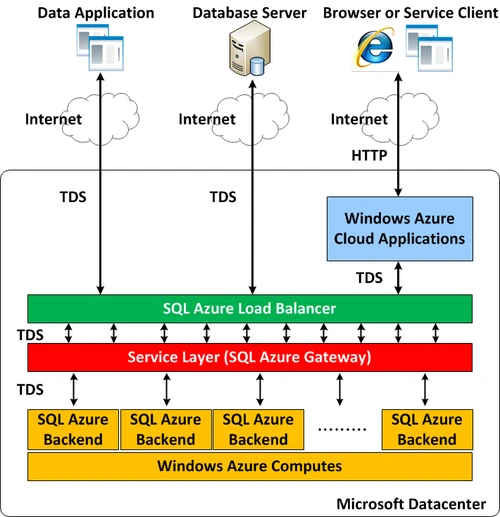
Microsoft Azure SQL Database
software
–
F
Flora of China
English-language multi-volume book and online database
–
T
Tilores
The API to unify scattered customer data in real-time
–
P
PgDog
PgDog is an open-source connection pooler, load balancer, and sharding proxy for PostgreSQL
–
F
Free AI Image Upscaler
Locally Increase Resolution of Images
–
B
BaseBuddy
An open-source Supabase CMS and WordPress-like editor for existing Supabase and Postgres databases
–
A
agentmemory
Persistent memory for AI coding agents
Frequently Asked Questions
What is the best databases in 2026?▾
Based on 9 community votes, PostgreSQL is currently ranked #1 in Databases with a score of 8.7/10.
How are databases ranked on Peakd?▾
Peakd ranks databases using trust-weighted community votes. Each user rates on a 1-10 scale, and votes are weighted by the user's trust score (based on account age, consistency, and verification). Rankings cannot be bought or manipulated by companies. An entity needs at least 2 votes to receive an official rank position.
How to choose the best databases?▾
Look at the overall community score, read discussions, and compare specific aspects like value, performance, and ease of use. You can also use the head-to-head comparison feature to see two options side by side.
What are the most popular databases?▾
Check the rankings above to see the most popular databases rated by the community. Not enough entities have received sufficient votes to compile a definitive top 3 yet.
Are Peakd databases rankings trustworthy?▾
Yes. Peakd uses trust-weighted voting to prevent manipulation. Rankings are based purely on community opinion — companies cannot pay for a higher position. All methodology is transparent.